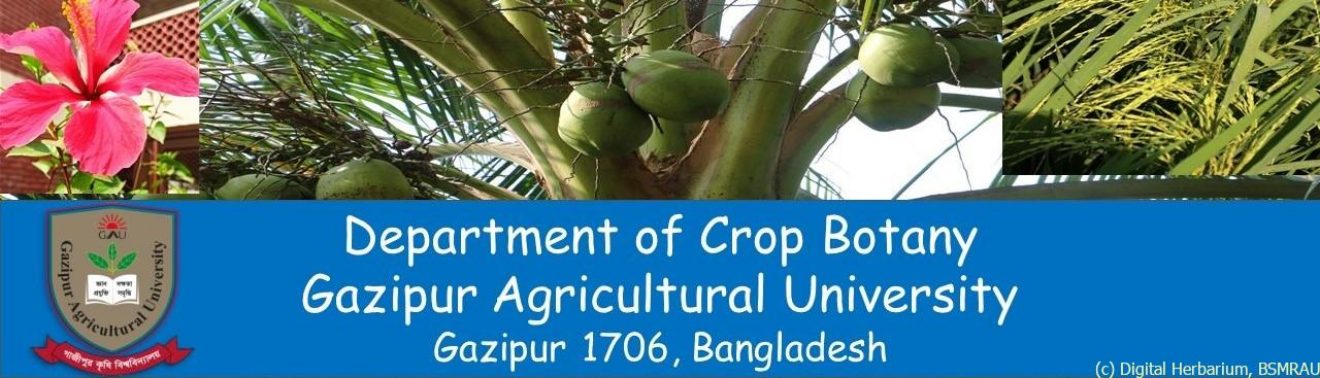
Taro
Taro
Scientific name: Alocasia esculenta (L.) Schott
Local name: ‘Mukhikachu’
Taxonomic Position According to Cronquist (1988)
| Kingdom | Plantae |
| Division | Magnoliophyta |
| Class | Liliopsida |
| Subclass | Arecidae |
| Order | Arales |
| Family | Araceae |
| Genus | Alocasia |
| Species | A. esculenta
|
Botanical Description of Taro
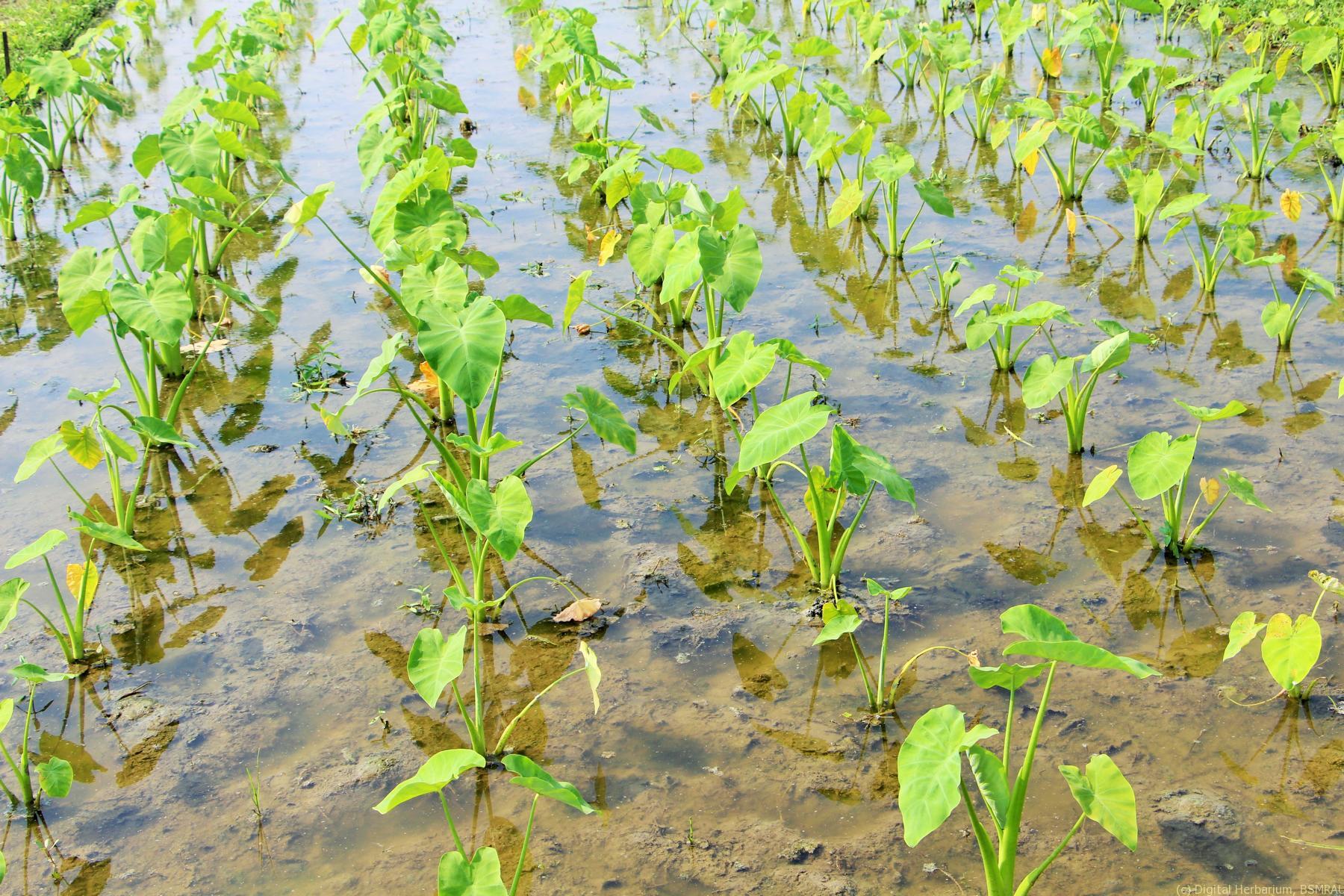
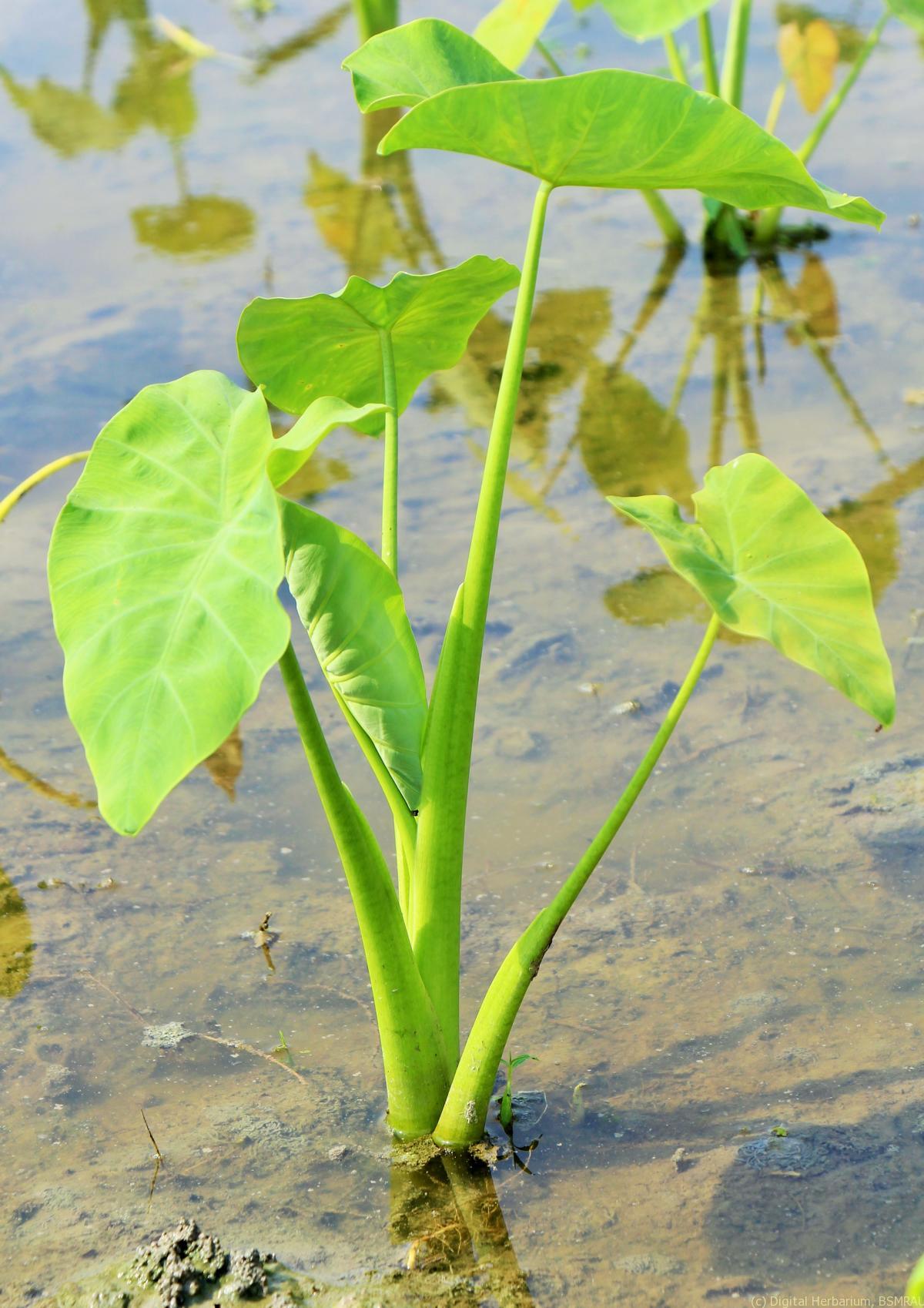

Habit: Perennial herb of 1-2 m tall.
Root: Adventitious root system, shallow and fleshy.
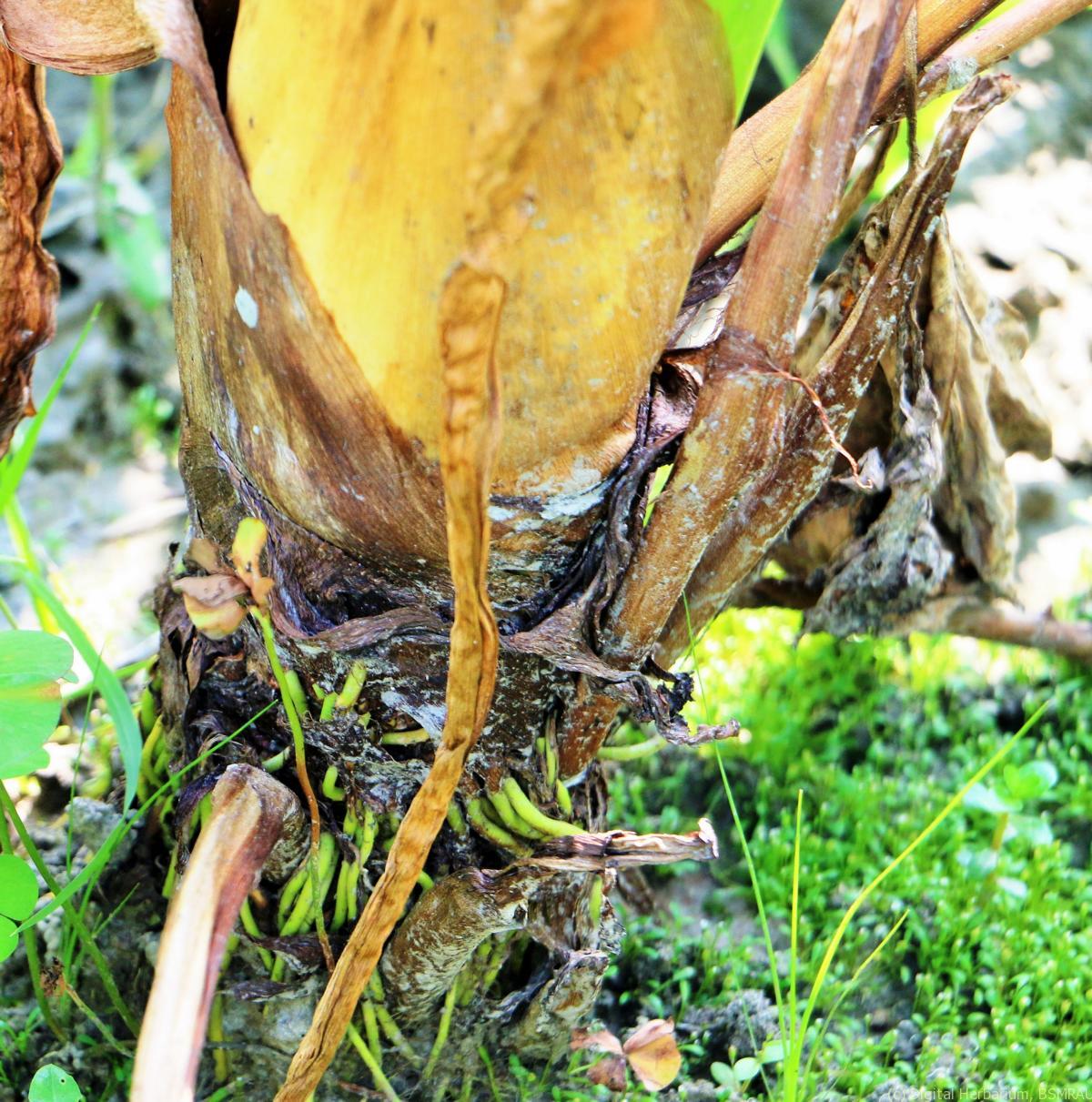
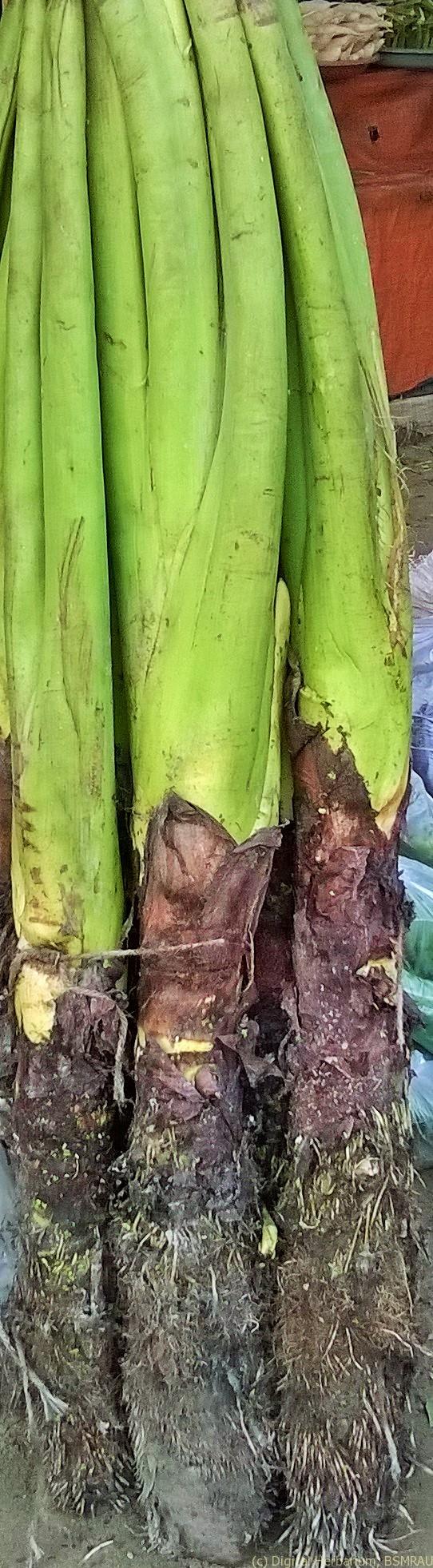
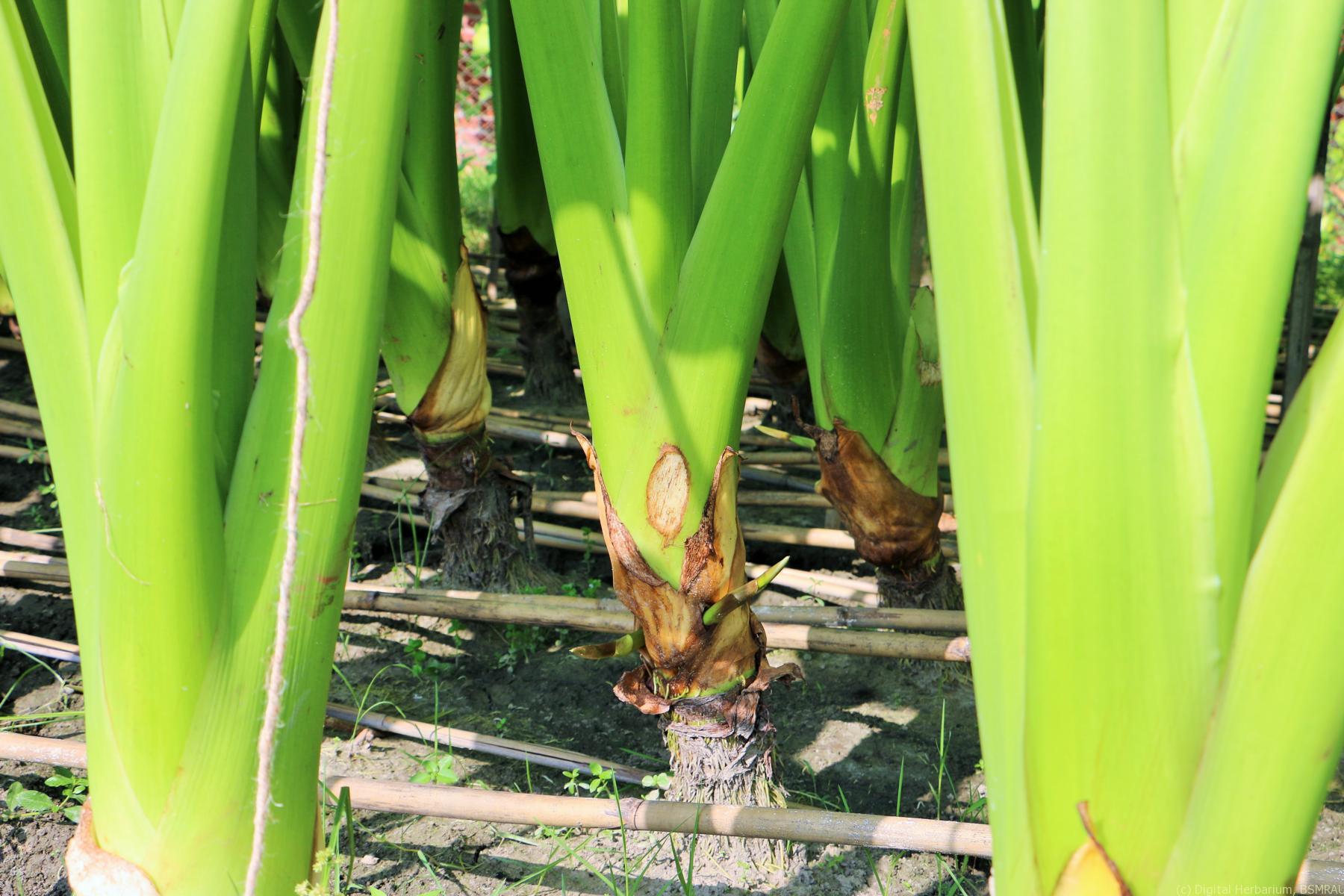
Stem: Underground stem modified into corm, is a cylindrical or spherical, bulb-like fleshy structure with short internode at the base of the stem.

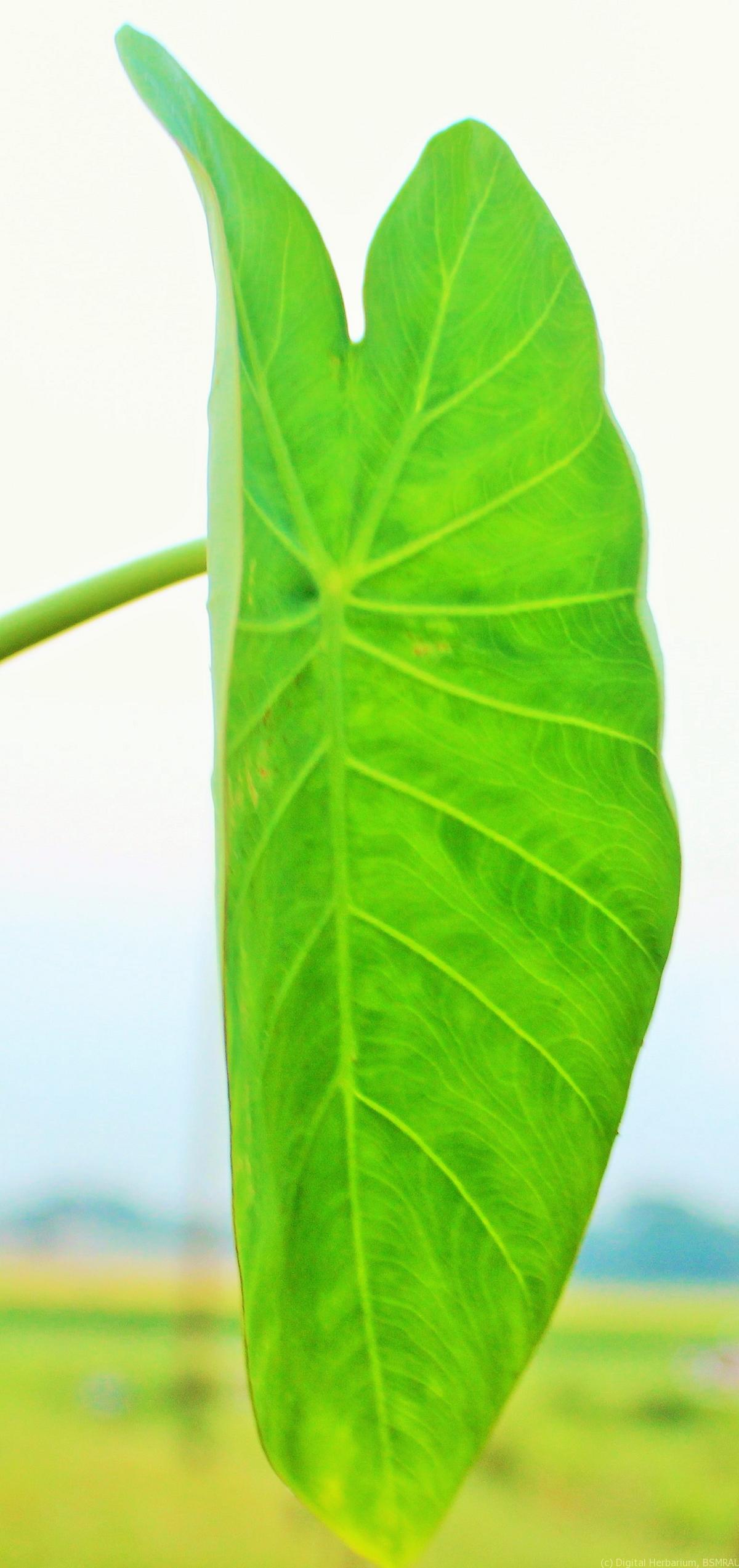
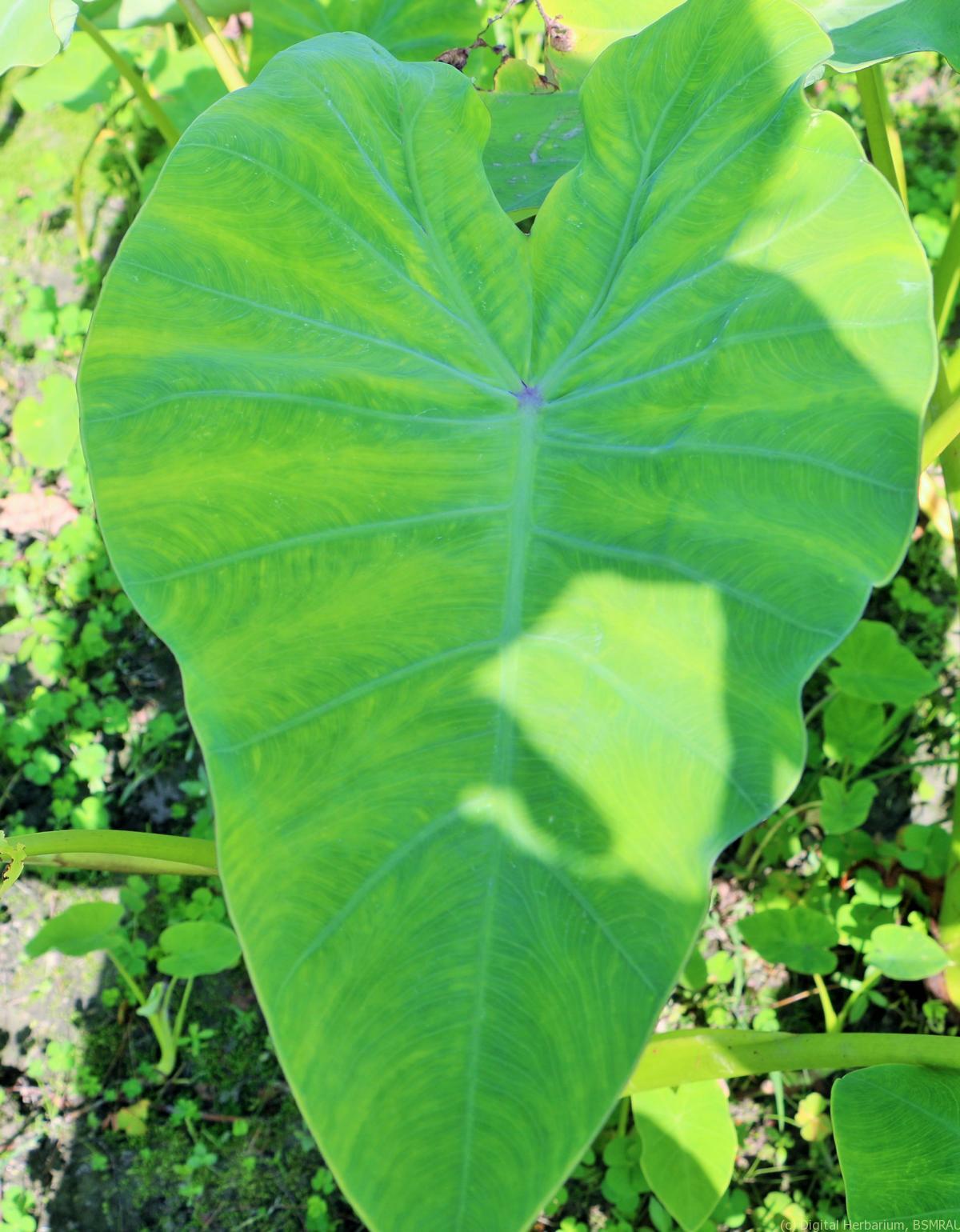
Leaf: Simple, alternate, composed of leaf sheath and leaf blade. The blade is big heart-shaped. The petiole is long.

Inflorescence: Spadix with bract, spathe.
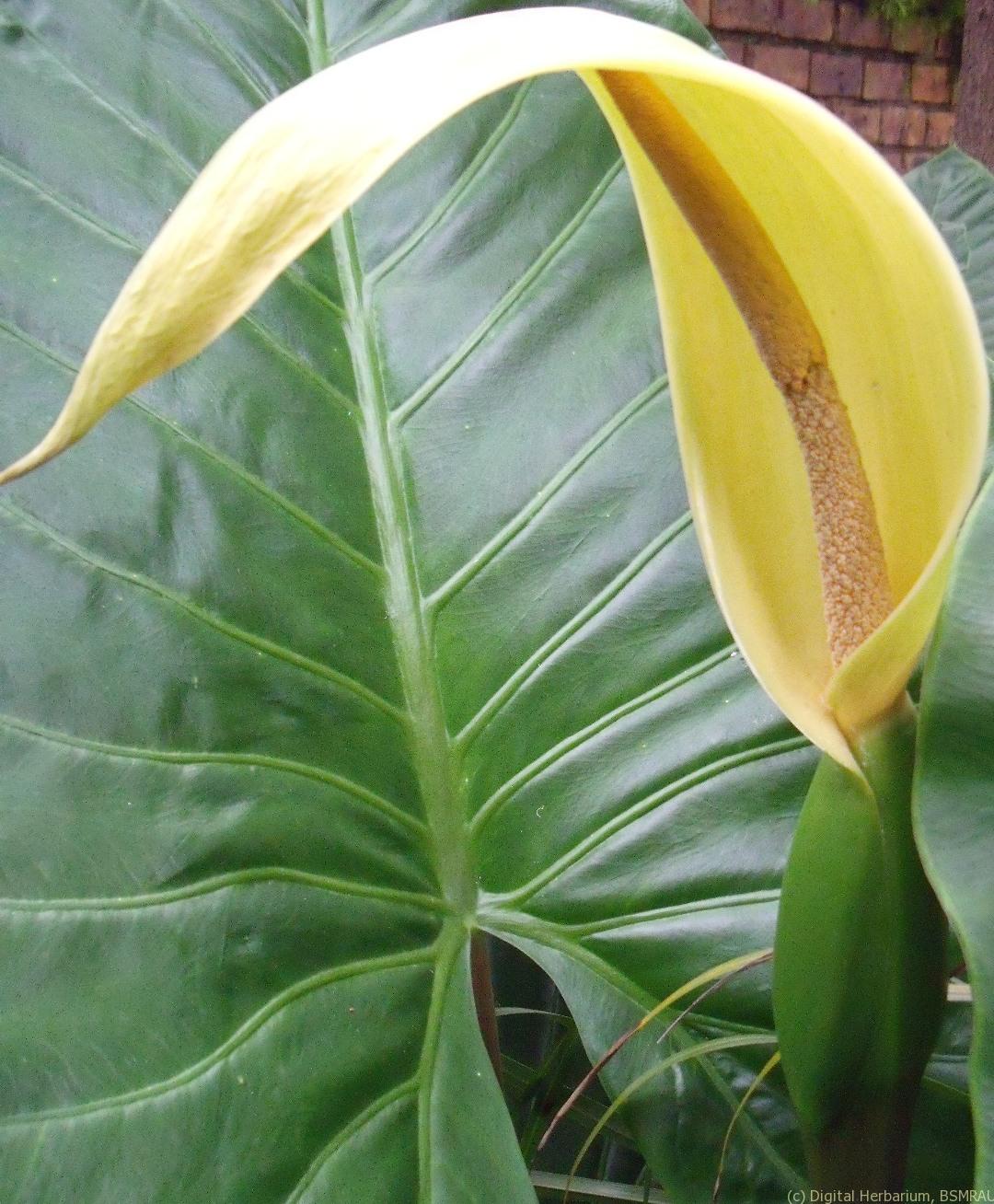
Flower: Three types of flower namely male, female and neuter flowers are present
Fruit: Berry
Chromosome number: 2n=28
Economic Importance: widely used as vegetable, almost every plant parts like leaf blade, petiole, rhizome, stole etc. are used as vegetable.
Table 1: Some aroids are developed by Tuber Crops Research Center (TCRC), Bangladesh Agricultural Research Institute (BARI), Joydebpur, Bangladesh
| Serial Number | Name of variety | Developed by | Year of Release | Growing season | Average Yield
(t ha-1) |
| 1 | Bilashi
(Mukhikachu) |
Tuber Crop Research Centre, BARI | 1988 | Kharif | 20-25 |
| 2 | Latiraj
(Panikachu) |
Tuber Crop Research Centre, BARI | 1988 | Kharif | 25-30 |
| 3 | BARI Panikachu-2
(panikachu) |
Tuber Crop Research Centre, BARI | 2008 | Kharif | 25-30 |
| 4 | BARI Panikachu-3 | Tuber Crop Research Centre, BARI | 2008 | Kharif | 20-25 |
| 5 | BARI Panikachu-4 | Tuber Crop Research Centre, BARI | 2013 | Kharif | 35-45 |
| 6 | BARI Panikachu-5 | Tuber Crop Research Centre, BARI | 2013 | Kharif | 35-40 |
| 7 | BARI Panikachu-6 | Tuber Crop Research Centre, BARI | 2017 | Kharif | 70-90 |
References